What a device driver does
Learn how a driver connects Windows to hardware, why generic support sometimes works, and when a manufacturer package is needed.
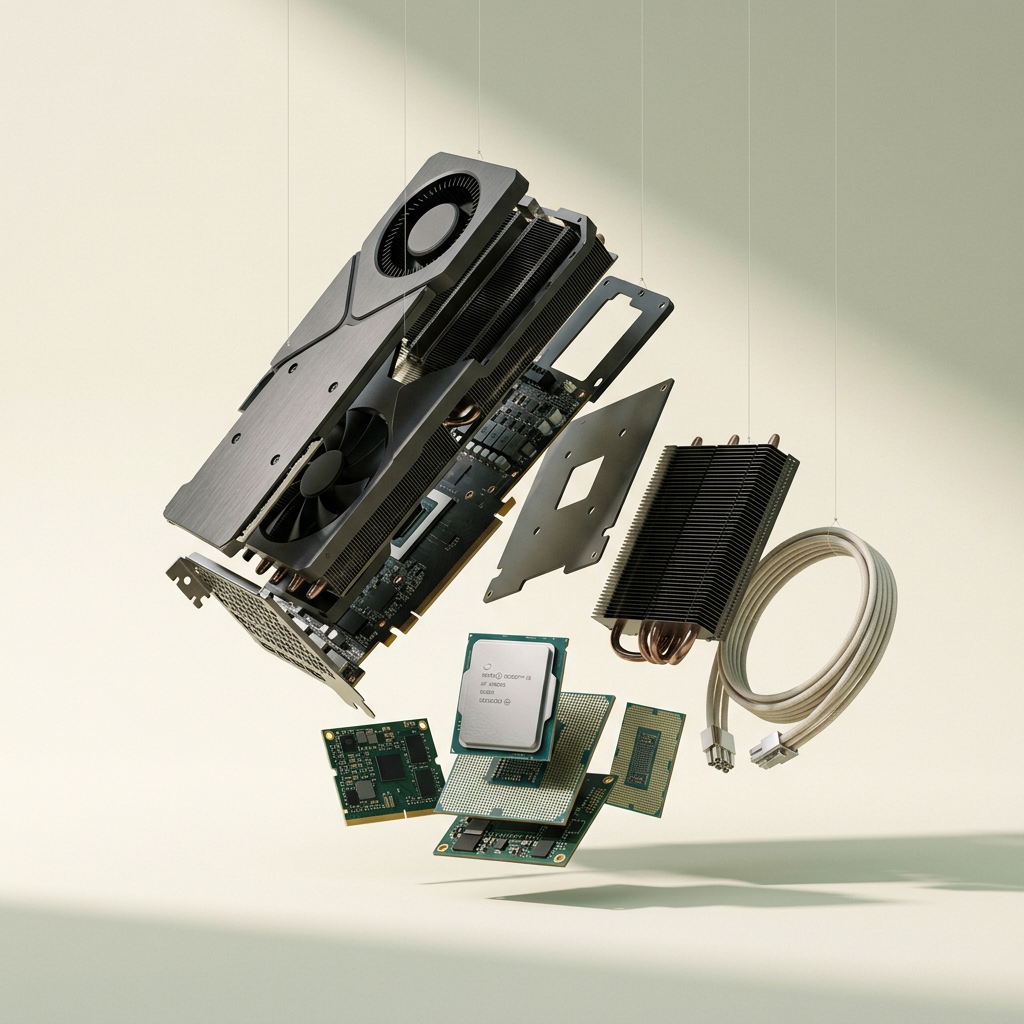
01The software interface to a device
A program does not normally control a graphics card or a network adapter by writing directly to its electronics. It asks the operating system for a service. A driver implements the device-specific work behind that service: preparing requests, handling data and reporting completion or errors.
Drivers can manage physical devices or software-created devices such as virtual network adapters. Some are supplied with Windows; others arrive from the device or computer manufacturer.
02Why the same device can have different support
A built-in class driver supports standard behavior shared by many devices. That is enough for many keyboards, USB storage devices and basic audio connections. A manufacturer package may add control panels, power features, acceleration or functions that the standard interface does not provide.
03When a driver deserves attention
A missing function, a Device Manager warning or a documented compatibility issue gives you a reason to investigate. Age alone is not a fault. A device that works correctly does not necessarily benefit from every newly published package.
Steps to follow
- Identify the device in Device Manager.
- Read its status message and Driver tab.
- Compare missing features or errors with the maker’s support information.
- Change the driver only when you have a compatible package and a reason.
Before installing, complete the driver update checklist. Record the existing version and keep a supported recovery package.
Important precautions
Drivers have access to important system functions. Do not install an unknown package to satisfy an unsolicited warning.
Official support and further reading
These links lead to publisher support pages, not to files hosted by daanch.